Wet Cat Food Basics: What to Know Before You Buy
How do you know your cat is getting the nutrition they really need? You’re constantly seeing cat food commercials, each claiming their product is better than the rest. It can be overwhelming.
At Sam’s Cats & Dogs, we help simplify that decision by offering a wide variety of high-quality cat foods and guiding you toward the best option for your pet.
Your cat is a natural hunter, descended from animals that ate a wide variety of prey. While wild cats hunted for balanced nutrition, your domestic cat depends on you to provide it. Choosing the right food plays a huge role in their long-term health and happiness.
What Nutrients Does Your Cat Need?
Cats are obligate carnivores, which means they require meat to thrive. This can come from sources like chicken, beef, lamb, fish, or eggs.
They also need:
- Fats to provide energy and help absorb essential vitamins like A, D, B1, B2, B3, and B6
- Protein to support muscle development and overall health
- Carbohydrates (in some foods) for additional digestible energy
A balanced diet ensures your cat stays active, healthy, and well-nourished.
How to Read a Cat Food Label
Understanding labels is one of the most important parts of choosing the right food.
Cat food packaging includes:
- Ingredients listed by weight (from highest to lowest)
- Guaranteed analysis, showing minimum and maximum levels of protein, fat, and fiber
Pay attention to wording:
- “Chicken cat food” = at least 95% chicken
- “Cat food with chicken” = as little as 3% chicken
- “Chicken dinner” or “formula” = 25%–95% chicken
Feeding instructions on the label are helpful, but they are not one-size-fits-all. Your veterinarian’s recommendations should always come first.
Also look for the nutritional adequacy statement, which tells you whether the food is formulated for kittens, adults, or all life stages.
Types of Wet Cat Food
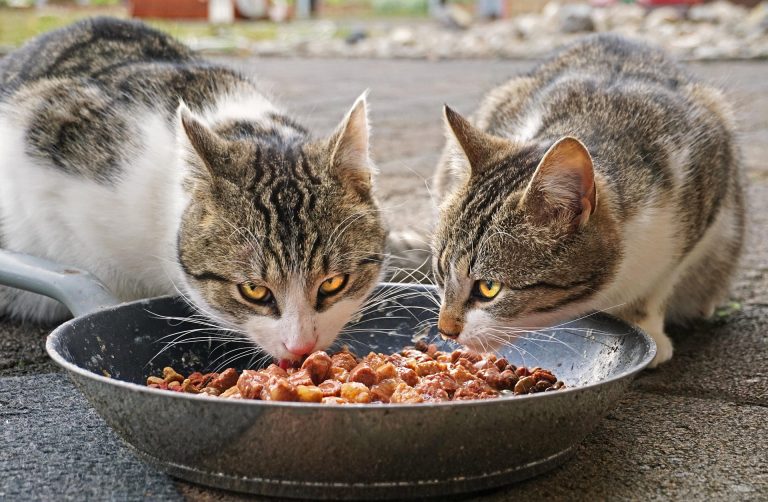
Wet cat food comes in a few different forms, but they all provide similar hydration benefits.
- Canned Food – The most common option, with a wide range of textures like pâté, shredded, or gravy-based
- Pouched Food – Convenient, single-serve portions that are easy to open and serve
- Tray or Cup Portions – Pre-portioned meals that reduce mess and simplify feeding
While packaging varies, the most important factor is still the quality of ingredients and nutritional balance.
How to Choose the Right Wet Food
Choosing the right wet food depends on your cat’s needs and preferences.
Wet food can be a great choice because:
- It helps increase hydration, especially for cats that don’t drink much water
- It’s often more appealing for picky eaters
- It can be easier to eat for older cats or those with dental issues
You can feed wet food on its own or combine it with dry food for variety and balance.